I don’t mean to be dramatic (it just happens naturally), but knowing your audience is the first, most important, and perhaps only part of marketing that really matters.
Most businesses don’t struggle because their product is terrible. They struggle because they’re talking to everyone at once and connecting with absolutely no one.
One minute they’re posting inspirational quotes on LinkedIn, the next they’re filming awkward office TikToks that look like a hostage negotiation with ring lights. Somewhere along the way, people forgot that customers are human beings, not “traffic sources” trapped inside a spreadsheet.
Good marketing has always been about understanding what people actually care about before trying to sell them something they never asked for.
That’s where Digital Marketing either becomes your best business tool or a very expensive bonfire. When it’s done properly, it helps you reach the right people, answer the right problems, and stop wasting money shouting into the void of the internet like a man arguing with a parking meter.
The businesses winning online usually aren’t the loudest or trendiest ones. They’re the ones with clear messaging, consistent systems, and the discipline to stop chasing every shiny new platform somebody on YouTube swears is “changing the game forever.”
If you don’t know who you’re talking to and what they want, how are you supposed to convince them that your offer is exactly what they need?!
You can’t, that’s how — but you can figure out everything you need to know about them by starting with their stage of awareness.
The 5 Stages of Awareness In Marketing
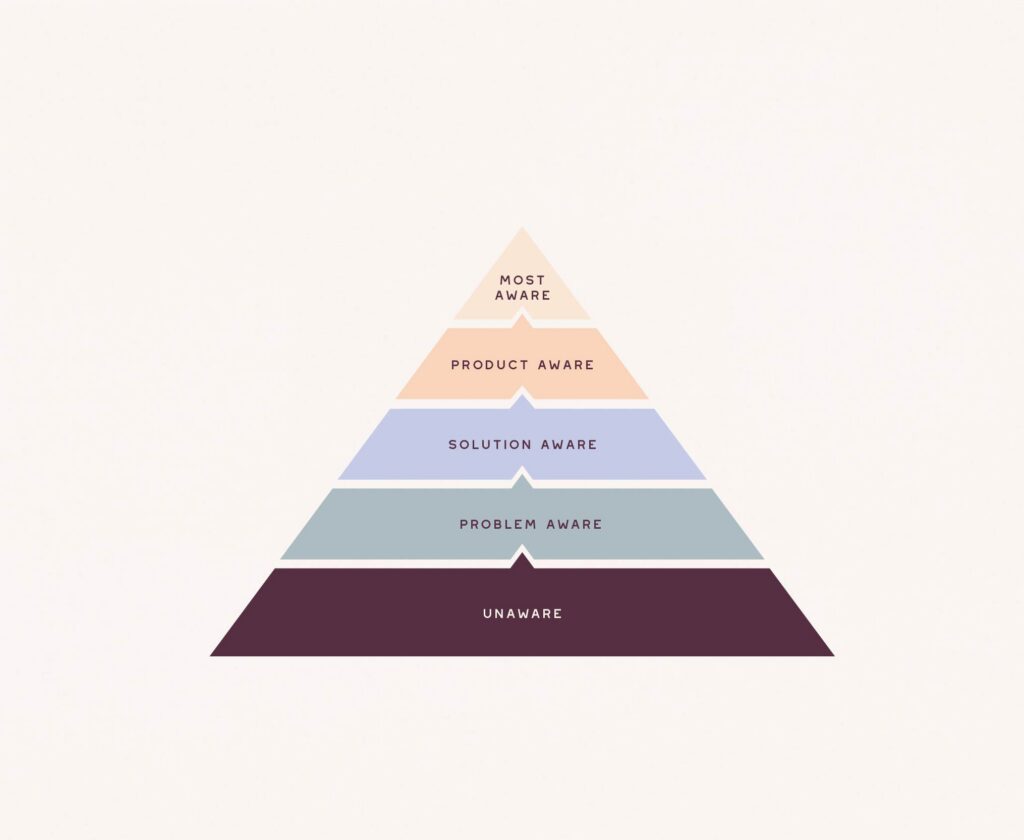
The stages of awareness can be used to describe how much your ideal client knows about two things: their situation, and your solution. The term and stages were coined by Eugene Schwartz in Breakthrough Advertising, and they’re the key to tailoring your message to your audience.
The TL;DR:
- The 5 stages of awareness in marketing go from “completely unaware I even have a problem” to “I’m ready to buy the solution”
- Bringing your content and copy to where your audience is in the moment ensures they don’t get lost, confused, overwhelmed, or bored
- When it comes to website copy, your audience is likely problem-aware to solution-aware
Stage 1: Unaware
This person has a problem, but isn’t aware that they do. They’re some of the hardest people to target in your messaging, because they have to first come to terms with the problem, then start to think about solving it. In terms of stages of awareness, they have the furthest to go.
Examples:
- A business owner who hasn’t connected their lack of sales to their lack of online presence
- A busy parent constantly feeling overwhelmed and exhausted doesn’t connect it to a lack of boundaries and self-care in their daily routine.
How to Create Content For The Unaware Audience:
This type of audience needs educational content that introduces their problem in a way that feels relatable and insightful. Keep it non-judgmental and approachable (obv) so they feel seen, not attacked!
Stage 2: Problem Aware
This person knows they have a problem but isn’t sure what to do about it. It’s your job to show them.
While they might not be able to say “I have a problem” or describe it, they can probably relate to the symptoms of their problem.
How To Create Content For The Problem Aware Audience
At this stage, your audience is actively feeling the pain of their problem. They need content that acknowledges and validates their struggles while hinting that solutions are available. Your tone should be empathetic and encouraging—this is the perfect opportunity to build trust and position yourself as a helpful guide.
- Educational Blog Posts: Write articles that address their specific pain points
- Social Media Content: Share relatable posts about common frustrations your audience faces
- Lead Magnets: Offer downloadable resources like checklists or guides (bonus: this gets them onto your email list!)
Creating content for problem-aware clients is wayyy more efficient than targeting the unaware stage. Here, people are actively looking for clarity and reassurance, making them more likely to engage with educational resources that validate their frustrations.
Stage 3: Solution Aware
This person knows there are solutions to their problem and is beginning to explore their options. They’ve done some research or have a general understanding of what’s out there but haven’t decided what approach or provider is right for them yet.
Of the 5 stages of awareness in marketing, THIS is where your website starts to come in.
Examples:
- A business owner struggling with poor sales has read about SEO and email marketing but isn’t sure which would make the biggest impact on their website’s performance.
- A homeowner with frequent plumbing issues knows they need to call a professional but is still comparing different local plumbers and their offerings (why am I choosing this example as the hill to die on? Idk, but it doesn’t *not* work)
At this stage, your goal isn’t just to educate—it’s to build trust and establish authority. You want to position yourself as the best guide to help them navigate their options and feel confident about choosing the right solution.
How to Create Content for the Solution-Aware Audience
At this stage, your audience needs clarity about the pros and cons of different solutions and reassurance that you understand their specific situation. Your tone should be authoritative yet approachable—think of yourself as their trusted advisor, their favorite teacher, their new educational big sister.
- Educational Blog Posts: Focus on content that helps them evaluate options, like “SEO vs. Email Marketing: Which One Is Right for Your Business?” or “5 Questions to Ask Before Hiring a Plumber.”
- Comparison Guides: Blog posts, lead magnets, or other resources that pit solutions against each other to help people choose the right one – like my guide to picking between Showit & Squarespace, or Flodesk & Kit
- Testimonials and Case Studies: Share real-world examples of how you’ve helped people solve similar problems to start planting seeds that *you’re* the solution (like having a highly stalkable portfolio)
TL;DR:
Creating content for solution-aware clients is one of the most effective ways to position yourself as the expert they need. These people are motivated AF —they just need the right nudge to move forward and pick you as their solution.
Stage 4: Product Aware
This person knows what type of solution they need and is now researching specific providers or products to decide which is the best fit. They’ve likely narrowed down their options and are comparing details like pricing, reviews, and unique approaches.
Examples:
- A business owner has found their top 2 candidates for a website designer and is now stalking their socials and portfolio to decide who to reach out to first
- A parent looking for a local daycare has shortlisted a few options and is reviewing their policies, safety measures, and testimonials to figure out where to tour
At this stage, your goal is to differentiate yourself from your competitors and demonstrate why you’re the ideal choice. These potential clients are close to making a decision—they just need reassurance that you’re the right fit.
How to Create Content for the Product-Aware Audience
At this stage, your audience is looking for specifics about what you offer, how it works, and why you’re the best option. Your tone should be confident, clear, and reassuring—this is where you show that you’re the expert they’ve been searching for.
- Services Page: Create a detailed, well-organized services page that explains your process, pricing, and what makes you unique. Highlight benefits and outcomes, not just features!
- Social Proof: Use testimonials, reviews, and case studies to show real-world results and build trust
- FAQs: Write an FAQ section to address common questions or concerns directly on your website, such as “What happens during our first session?” or “How long does it take to see results?”
- Clear Calls-to-Action (CTAs): Make it SO INCREDIBLY EASY for them to take the next step, whether it’s scheduling a consultation, filling out an inquiry form, or calling you directly
TL;DR:
Creating content for product-aware clients is highly effective because these people are already interested in taking action. They just need a clear picture of why your approach, process, or offering is the best match for their needs. DO NOT HOLD BACK HERE – go seal the damn deal!
Stage 5: Most Aware
This person knows they want to work with you or buy your product—they just need to take the final step. They’ve already made up their mind but might be looking for a last bit of reassurance, like a nudge of encouragement or confirmation that they’re making the right choice.
Examples:
- A business owner has decided they want to hire you as their designer because they love your portfolio and messaging but needs to confirm pricing or availability before hiring you (not to say I told you so, but this is why I say to always list your prices)
- A bride/groom-to-be knows they want a specific wedding planner after seeing their testimonials and styled shoots, but hesitates to send the inquiry form because of nerves or timing
How To Create Content For The Most Aware Audience
At this stage, your audience doesn’t need convincing – they just need clarity and ease of access. Your tone should be confident, encouraging, and welcoming. Make it feel as simple and rewarding as possible for them to take the next step, and make it incredibly clear what that next step is.
Examples:
- Booking Pages: Have a straightforward, user-friendly inquiry form or booking system that’s easy to navigate. Include details about what happens next after they reach out.
- Encouraging CTAs: Use action-oriented language like “Inquire Now” or “Book A Call” to make them feel confident in reaching out.
- Guarantees and Reassurance: Include things like refund policies, satisfaction guarantees, or “Here’s What to Expect” sections to eliminate last-minute doubts.
- Social Proof: Continue reinforcing their decision with testimonials, trust badges (e.g., certifications or awards), or success stories prominently displayed.
TL;DR:
Of alllll of the 5 stages of awareness in marketing, creating content for the most aware clients is one of the easiest and highest-ROI marketing efforts. These are the people who are ready to take action – they literally just need you to tell them how, so do.
Leveraging The 5 Stages of Awareness In Marketing
One of theeee best ways to save time and get more out of your marketing is to tailor your efforts based on where your audience is in their stage of awareness.
People who find you randomly on social media are often in lower stages of awareness, while those who specifically search for your solution (like through Google or referrals) tend to be further along.
When you match your content to your audience’s context, you spend less time creating and get more results.
How To *Actually Use* The 5 Stages of Awareness In Marketing
- Save the educational, informational content for socials/blogs and encourage people to take the relationship to your website or email list
- Focus your website and email list on your problem/solution aware audience
- Be consistent and remember you can’t make people do anything. You can, however, offer them the tools and information that may help them move along the stages of awareness by themselves
Want some help doing it?
This is my whole thing – and I’m absolutely your girl. Here’s how I can help:
>> Download my free resource, The Copy Cache, to collect better client reviews and build a word bank that helps you target the stages of awareness.
>> Join Cook Your Copy and get my help figuring out what your audience needs to hear *and* actually writing your essential site pages!